
Ophthalmic Applications of Point of Care Ultrasound Micro-Credential (PgCert Module)
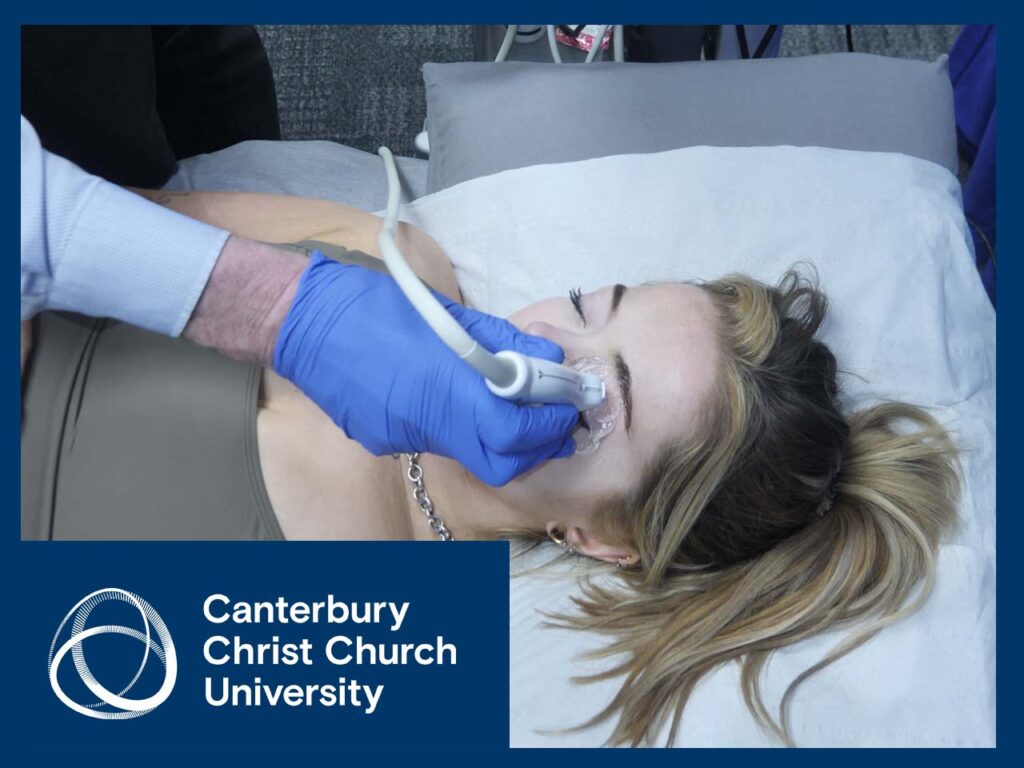
Point-of-care ultrasound (PoCUS) is increasingly recognised as a valuable tool in the rapid assessment of ophthalmic presentations in acute and emergency settings. This module, offered in partnership with Canterbury Christ Church University, introduces clinicians to the role of PoCUS in evaluating a range of ocular conditions, including retinal detachment, vitreous haemorrhage, ocular trauma, and raised intracranial pressure.
The programme focuses on developing both the theoretical understanding and practical competence required for safe ophthalmic ultrasound practice. Participants will learn how to obtain and optimise ocular ultrasound views, interpret findings in the context of clinical presentations such as sudden visual loss or trauma, and understand how PoCUS results can guide further investigation, referral, or management.
This micro-credential can be taken as a standalone course or as part of our PgCert in PoCUS programme. Click here to learn more about the other micro-credentials we offer.
Next dates: 21st January – 25th March 2027
Fee: £900
What is a micro-credential?
A micro-credential is a short, specific course of study, with an assessment which earns credits. The Credit Accumulation and Transfer Scheme is a national UK university scheme to allow credits to be earned and accumulated. For example, a typical postgraduate diploma is 120 credits, a typical PgCert is 60 credits. Each of our micro-credentials earns 10 credits, with each credit representing the notional equivalent of 10 hours of study.
What is the commitment?
Each micro-credential requires 100 hours of notional study, most of which will be self-directed learning. However, for micro-credentials with a practical component, you must also complete a minimum of 21 hours of in-person, hands-on training at our London-based training centre if this is your first micro-credential with us, or 15 hours if you have already attended one of our other micro-credentials. You can enrol on up to two micro-credentials per term.
What are the entry requirements?
- Professional Registration: Registered with the General Medical Council (GMC), Health & Care Professions Council (HCPC), or Nursing & Midwifery Council (NMC).
- Educational Background: A relevant first degree, such as MB BS (or equivalent), or a bachelor’s degree, ideally at first-class or 2:1 level.
- Clinical Experience: Current employment in an appropriate role within the NHS or a UK-based private healthcare provider, with evidence of basic ultrasound experience.
What does the Ophthalmic PoCUS course cover?
- Medico-legal responsibilities and scope of practice in ophthalmic PoCUS
- Role of departmental protocols and clinical indications for ocular ultrasound
- Patient communication, preparation, and consent
- Relationship between PoCUS and other imaging modalities in ophthalmology
- Image acquisition, probe handling, and recognising adequate views
- Ultrasound artefacts and interpretation in the ocular context
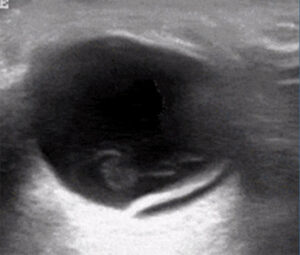
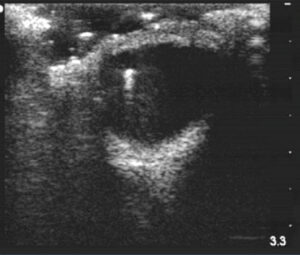
- Identification of normal and pathological features, including:
- Retinal detachment
- Vitreous haemorrhage
- Lens dislocation
- Intraocular foreign body
- Papilloedema / raised intracranial pressure
- Ocular trauma
- Use of PoCUS in conditions including sudden visual loss, trauma, and monitoring intracranial pressure
- Influence of ultrasound results on onward imaging and referral decisions
How is the course taught?
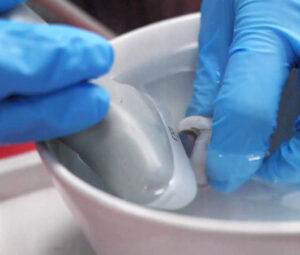
You will have access to video materials covering the theoretical content. Didactic teaching will be combined with practical face-to-face sessions, where you will use a range of ultrasound systems to develop scanning skills on normal volunteers. Additionally, simulators will be used to practise imaging and identifying various abnormalities.
You must complete the required number of in-person practical training hours for this module—21 hours if it’s your first, or 15 hours if you’ve previously completed another module—before your assessment day.
How will your skills of ophthalmic PoCUS be assessed?
The award of the micro-credential will require successful completion of both written and practical assessments. The knowledge content will be assessed through a multiple-choice examination using still images where appropriate. Practical skills will be assessed through obtaining optimal images on normal subjects and through obtaining optimal images of simulated pathology on simulators.
Schedule
The in-person training sessions will run from 9:30 am to 4:30 pm. Attendance on the first training day is mandatory for new students. Attendance on the second training day is highly recommended to ensure you gain the foundational knowledge needed for further training. Attendance on the remaining training days is flexible.
However, you must complete at least 21 hours of in-person training at our London-based training centre for your first practical module and 15 hours for each subsequent practical module before your assessment.
Spring Term 2027 Dates:
21–22 January 2027 – core training days (21 January is mandatory for new students)
4–5 February 2027 – training days
25–26 February 2027 – training days
11–12 March 2027 – training days
24–25 March 2027 – assessment days
Assessment attendance is mandatory. Different modules will be assessed on different days. Depending on the module(s) you are taking, you may need to attend one or both assessment days. We will confirm your assessment schedule in advance.
We may be able to offer an additional in-person training session if required.
What doctors say about our PgCert and micro-credentials programme
Don’t Want to Miss Out?
Register your interest, and we’ll notify you as soon as the next course dates are open for booking!
Subscribe to Bromley Emergency Courses’ weekly email newsletter to keep up with the latest emergency medicine training news and courses
*By proceeding you give your consent to be contacted via email with updates on courses and events by Bromley Emergency Courses. You may unsubscribe from these communications at any time. We will never share your details with 3rd parties and will only use your email to send you information about our upcoming courses and other offers.